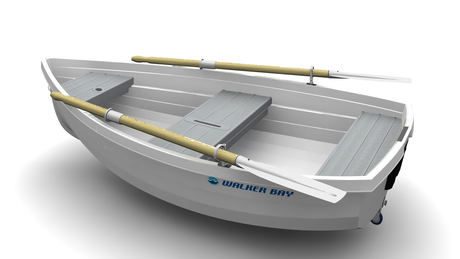
If you're anchoring out regularly, a dinghy stops being a nice-to-have and becomes part of how you actually live aboard or day-sail. Getting to shore, ferrying supplies, ducking into a quiet cove your main boat can't reach, all of it depends on having a tender you can trust and don't have to think too hard about.
The first thing most sailors weigh is weight and manageability. A tender that's too heavy to lift onto deck or too awkward to tow becomes a chore rather than a convenience. The Walker Bay 10 was designed with this in mind. Its solid polypropylene hull keeps things simple: no inflation to manage, no valves to check, just a boat that's ready to go the moment you need it.
Towing behavior matters just as much. A full-length molded keel running from bow to stern helps the Walker Bay 10 track straight behind a larger boat instead of yawing side to side, which makes a real difference on longer passages or in a following sea. The same keel design also helps when rowing, giving the boat a straighter, more predictable line without constant correction.
Storage is another consideration a lot of sailors underestimate until they're actually trying to solve it. Because the Walker Bay 10 is a solid hull, it stows upside-down on deck and lowers overboard without the rigging or setup an inflatable often requires. That's one less task standing between you and getting ashore.
For sailors who want a dependable, low-maintenance tender that rows well, tows predictably, and doesn't demand much in the way of upkeep, the Walker Bay 10 is a solid option worth considering. It's available at The Harbour Chandler, ready to pair with your season's plans.